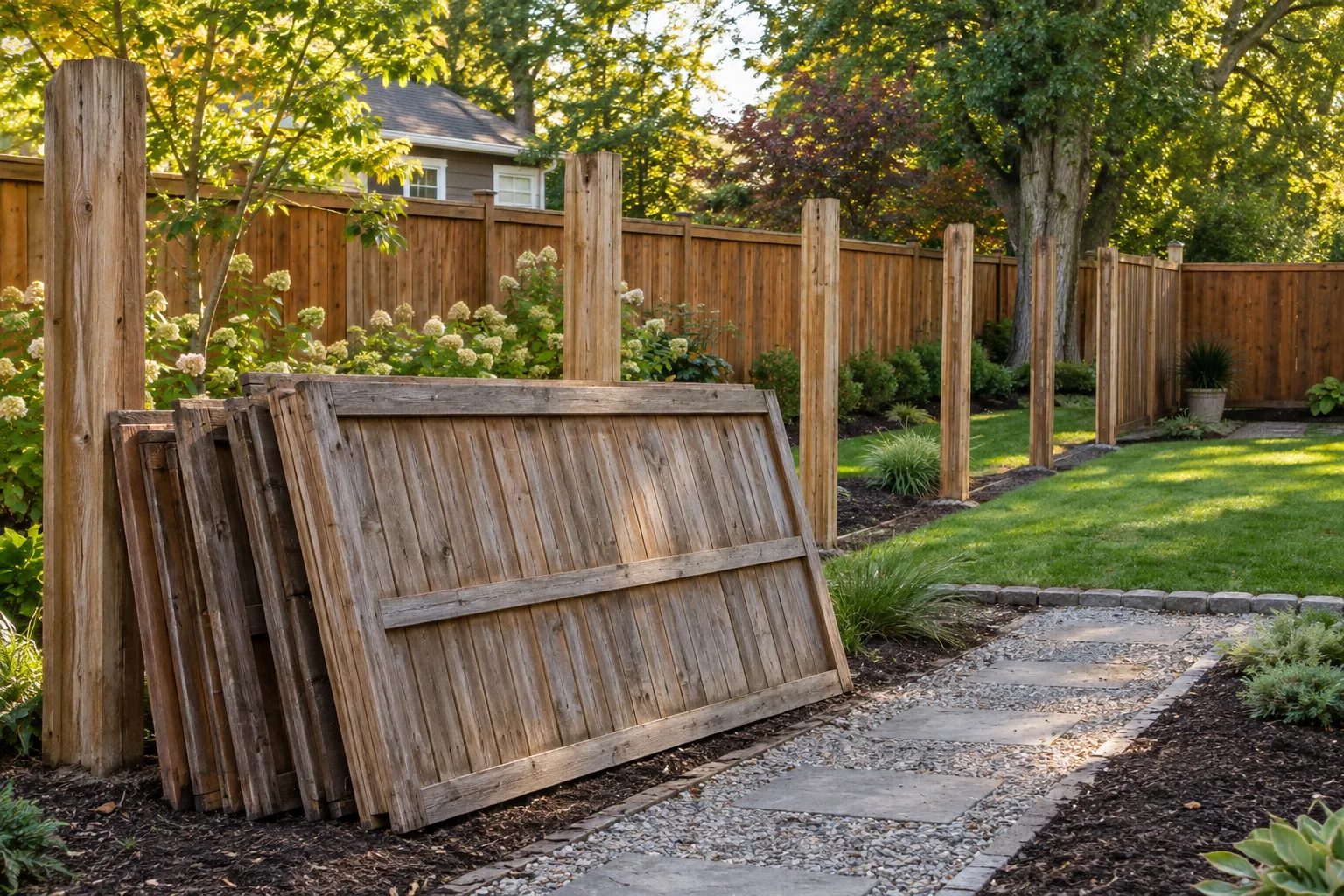
Confirm ownership and the exact run to be removed. A fence near a boundary is not a place for assumptions. Mark panels and gates that stay.
What follows removal?
If a new fence is scheduled, ask the installer what should remain. Reusing sound posts requires a different scope from clearing every post and footing.
How are posts set?
Wood, steel and masonry posts behave differently. Concrete footings add weight and may require work below grade that is not part of a basic panel removal.
What runs beside it?
Look for irrigation, lighting, drainage, vines and planted beds. Mark known utilities and discuss dense growth before work begins.
Where can panels travel?
Measure gates and identify the loading point. Long panels may need to be broken down when the route turns sharply or passes close to the house.
Are there treated or painted materials?
Old outdoor lumber may be treated or coated. The EPA advises separating treated wood and never open-burning CCA-treated wood. Local facilities set their own acceptance rules, so material type needs to be reviewed.
What does finished mean?
Agree on post holes, concrete, loose hardware, gate latches and the final sweep. A clear finish line prevents the replacement crew from inheriting an avoidable surprise.
Sources and limits
Material-handling guidance references the U.S. EPA’s construction and demolition material guidance and CCA-treated wood fact sheet. Local facility rules and job conditions still need direct confirmation.
EPA: C&D material best practicesEPA: CCA-treated wood